Character Stories
The six heroes of Ellowyn and the Realm's named terrors, in their own histories. This page grows as more stories are written.
Heroes (6)
The six playable heroes of Ellowyn, in their own histories.
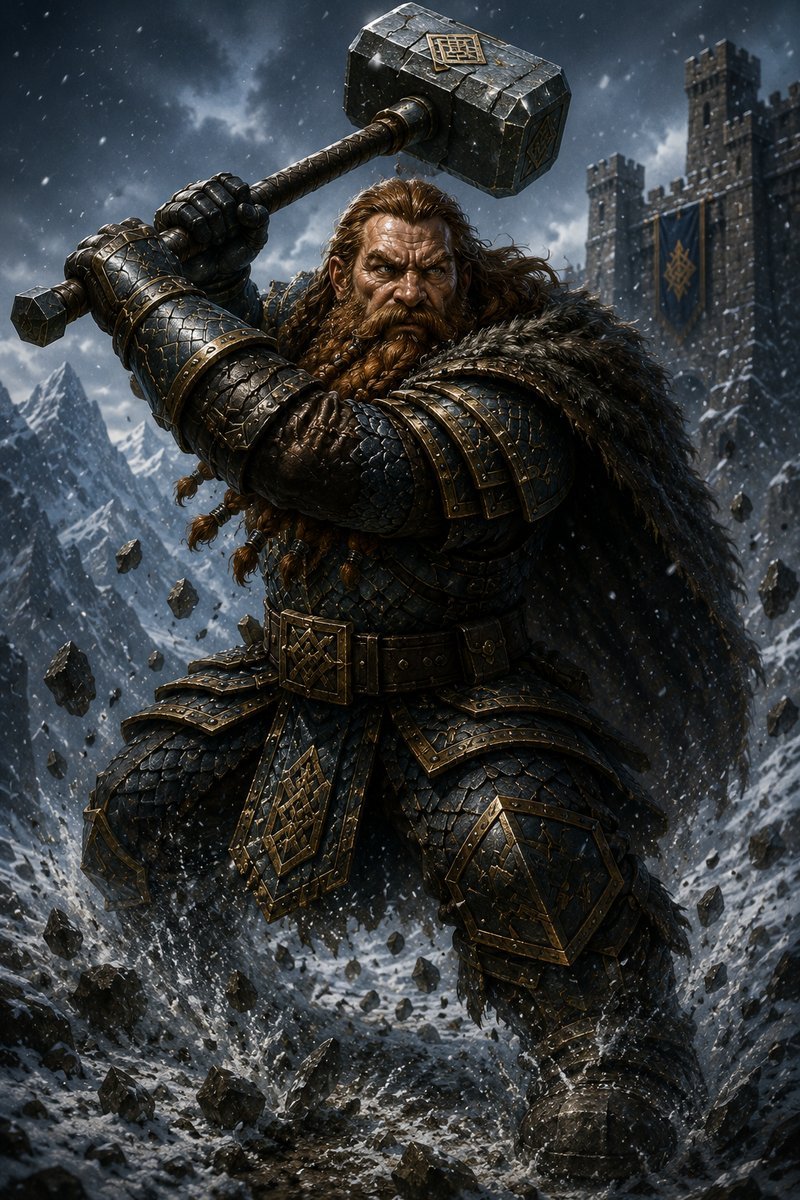
Torvin Stonefist
Ironhold did not exile Torvin for failing to defend it. That was the part he could never make anyone understand, in the years after, when the story had already hardened into something simpler than the truth. He defended it exactly as he was trained to — stood the line, held the gate, took every wound the enemy had to give rather than let them past him. Ironhold fell anyway. Not because Torvin failed, but because a Warden's oath was never built to survive the day the thing worth defending stops existing, and no one had thought to write him a second oath for after.
They exiled him for what he did next, which was refuse to stop standing the line. He kept a watch over a gate that no longer led anywhere, for a hold that no longer stood, until the clan elders who remained told him, not unkindly, that grief was not the same thing as duty and that he was frightening the children. He left rather than be told a third time. He took his hammer, his shield, and the particular stubbornness that had kept him upright through a siege no one else walked away from, and he went looking for something else worth standing in front of.
He found the Realms of Ruin instead, or they found him — it hardly matters which, to a man who has already decided that standing his ground is the only shape his life still knows how to take. He does not talk about Ironhold unless asked twice. He does not need to. Every hit he takes and stays upright through is the same promise he made the first time, said again to whoever happens to be standing behind him now.

Sylara Dawnweave
The Crystal Spire keeps every book anyone has ever been afraid to finish reading, and Sylara read all of them anyway. Not recklessly — she was never reckless, whatever the other Lorekeepers said behind her back — but thoroughly, the way a person reads when they've already decided that not knowing is worse than any answer they might find. She catalogued the dangerous texts precisely because everyone else wouldn't touch them, and in doing so became the Spire's foremost expert on exactly the kind of knowledge a place like the Spire exists to contain.
It was in one of those texts that she first read about the Rifts — not as they are now, but as a theory, an old and mostly-dismissed warning about doors that open from both sides. She raised it with the Spire's elders and was told, gently, that some warnings are old for a reason: because they never came true. She kept the notes anyway. When the Rifts opened for real, she was the only Arcanist in the Spire who wasn't starting from nothing.
She casts the way she reads — carefully, completely, and at a cost she's already decided is worth paying. A wound taken to force a spell to land right is not so different, to her, from a night lost to a book that mattered. She sees threads other people can't, in old texts and in the world both, and she has stopped being surprised by how often the two turn out to be the same thread.
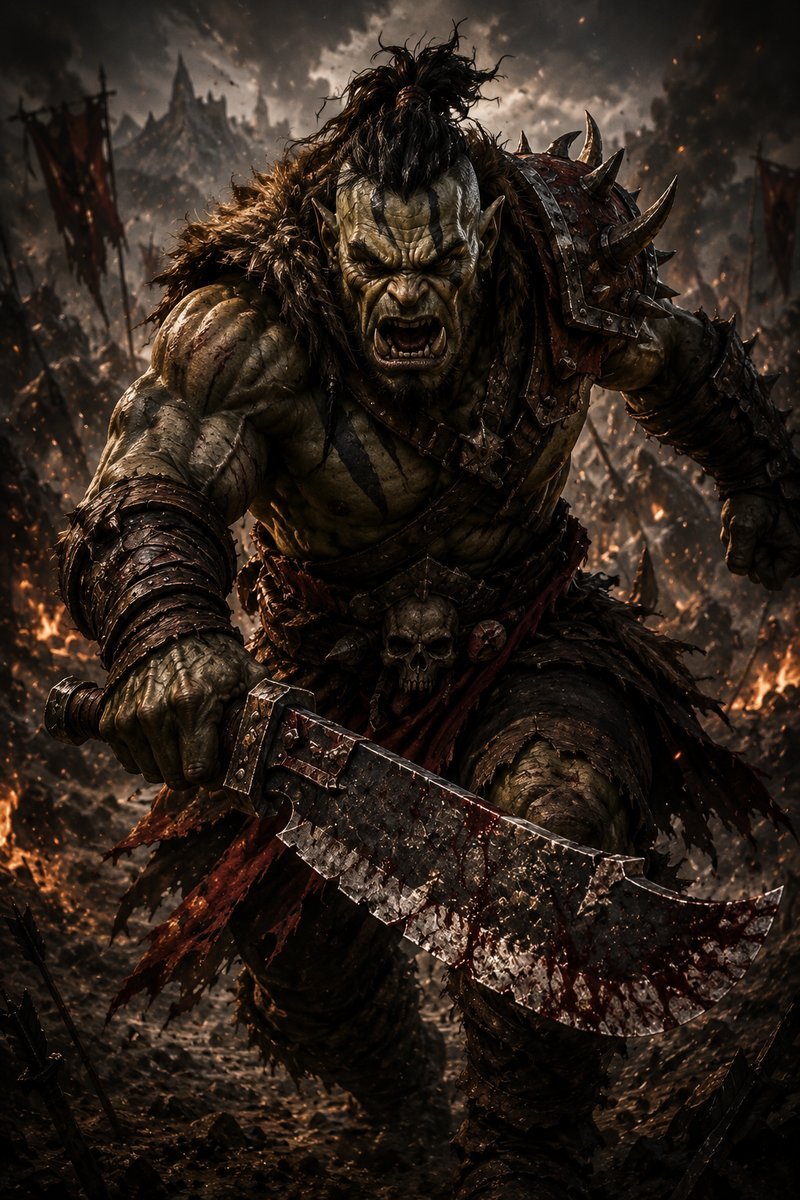
Drek Ashblade
The Cinderpass Narrows do not raise anyone gently, and Drek was raised less gently than most. Half-Orc in a raider camp that had no particular use for half-measures of any kind, he learned early that hesitation got you hurt worse than committing did, even when committing was the wrong call. So he stopped hesitating. By the time he was old enough to carry a real blade, he'd already built the only philosophy the Narrows had ever really offered him: hit first, hit hardest, and worry about the cost of it after — because there is always a cost, and waiting never once made it smaller.
He left the raiders the way most things leave the Narrows — not gracefully, and not because he'd had a change of heart about violence, but because the raiders had started pointing that violence at people who hadn't done anything to deserve it, and even Drek's philosophy had a line buried in it somewhere. He didn't announce his departure. He just stopped being there one morning, cleaver in hand, and didn't look back at a camp that had never once looked back at anyone it left behind either.
He fights now the same way he always has — all in, every time, the wound he takes on the way to landing a second blow just the cost of doing business. What's changed is who he's swinging for. It used to be for the camp, or for nothing at all. Now there's a reason attached to it, even if he'd never admit out loud how much that matters to him.
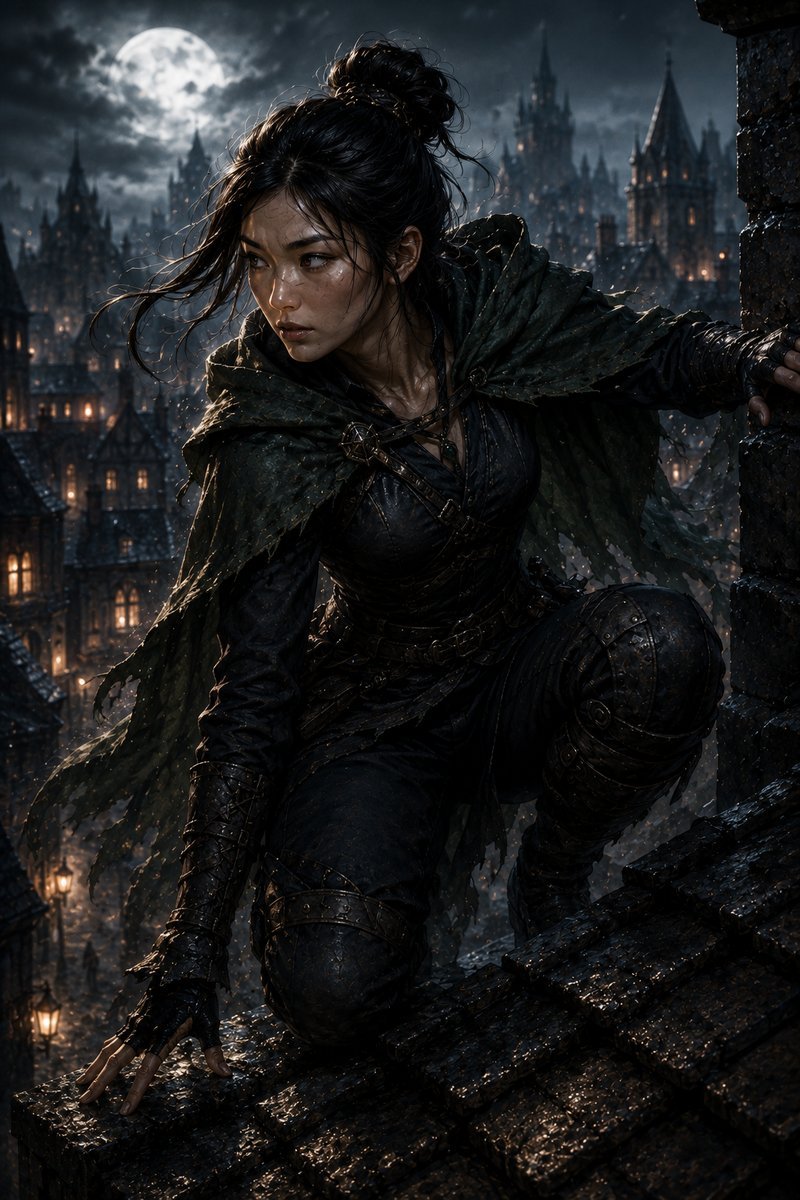
Mira Whisper
Veilmoor doesn't have an orphanage so much as an understanding — that the children who end up with nowhere else to go will end up somewhere, one way or another, and it's better for everyone if that somewhere has rules. Mira learned the rules fast, the way she learned everything: by watching, quietly, from just outside the light where nobody thought to look. She was good at being unnoticed before she was good at anything else. It was the first skill Veilmoor taught her, and the only one nobody had to teach twice.
She turned that into a trade the way half of Veilmoor's vagabonds eventually do, and better than most, because Mira had a gift the others didn't: she knew exactly how much to risk and when, and she never once mistook boldness for recklessness. A coin flipped on a gamble worth taking; a job walked away from the second the odds turned sour. She built a reputation on that instinct long before she built one on her knives, and the two together made her someone worth hiring for jobs other people were too proud, or too cautious, to take.
She still runs the numbers on everything, even now, even when the stakes are a lot higher than a purse worth lifting. Committing fully to a gamble and getting burned for it if it doesn't pay off is a risk she's made peace with — because she's watched enough people flinch at the wrong moment to know that half-measures get you killed just as fast as bad luck does, and at least her own way, the losses are hers to own.
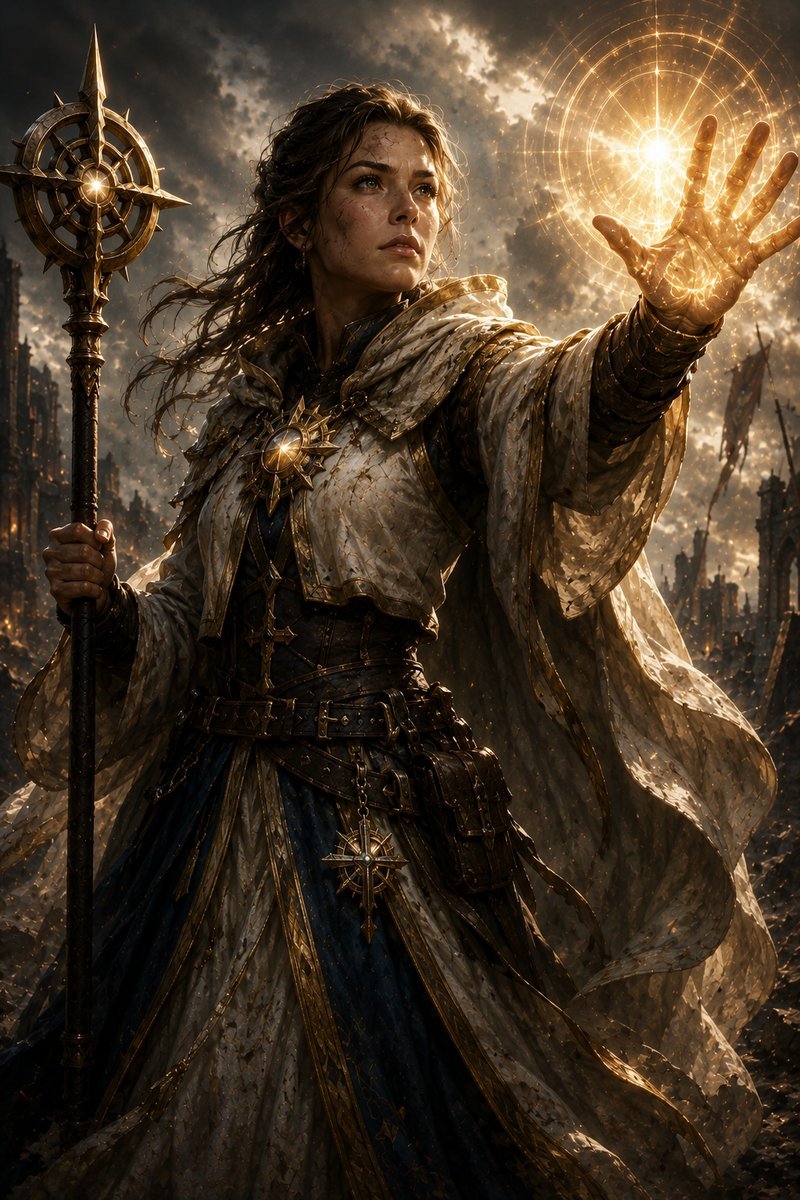
Sister Aelindra
The Dawnchurch does not train its priestesses to fight. It trains them to notice — who is tired past the point of admitting it, who is carrying a grief they haven't named yet, who will fall if no one quietly rearranges the weight they're carrying. Aelindra was better at noticing than anyone her order had seen in a generation, which her elders took as a sign she was meant for the quiet, contemplative track: prayer, counsel, small mercies administered one at a time.
She left that track the first time she watched someone she'd noticed too late. It wasn't dramatic — no one died, not that day — but she understood, all at once, that noticing was only half of what she'd been trained for, and that the Dawnchurch had never quite taught her what to do with the other half: the part where you stop watching and simply take the blow yourself, because you were close enough to and someone else wasn't. She started training for that instead. Nobody stopped her twice.
She still notices everything. It is the first thing about her that anyone traveling with her learns — that she has already clocked exactly how much each of them is quietly carrying, often before they've admitted it to themselves. What's different now is what she does with it. She has made a habit, and then a calling, and now something closer to a vow, of simply taking a share of the weight before anyone has to ask.
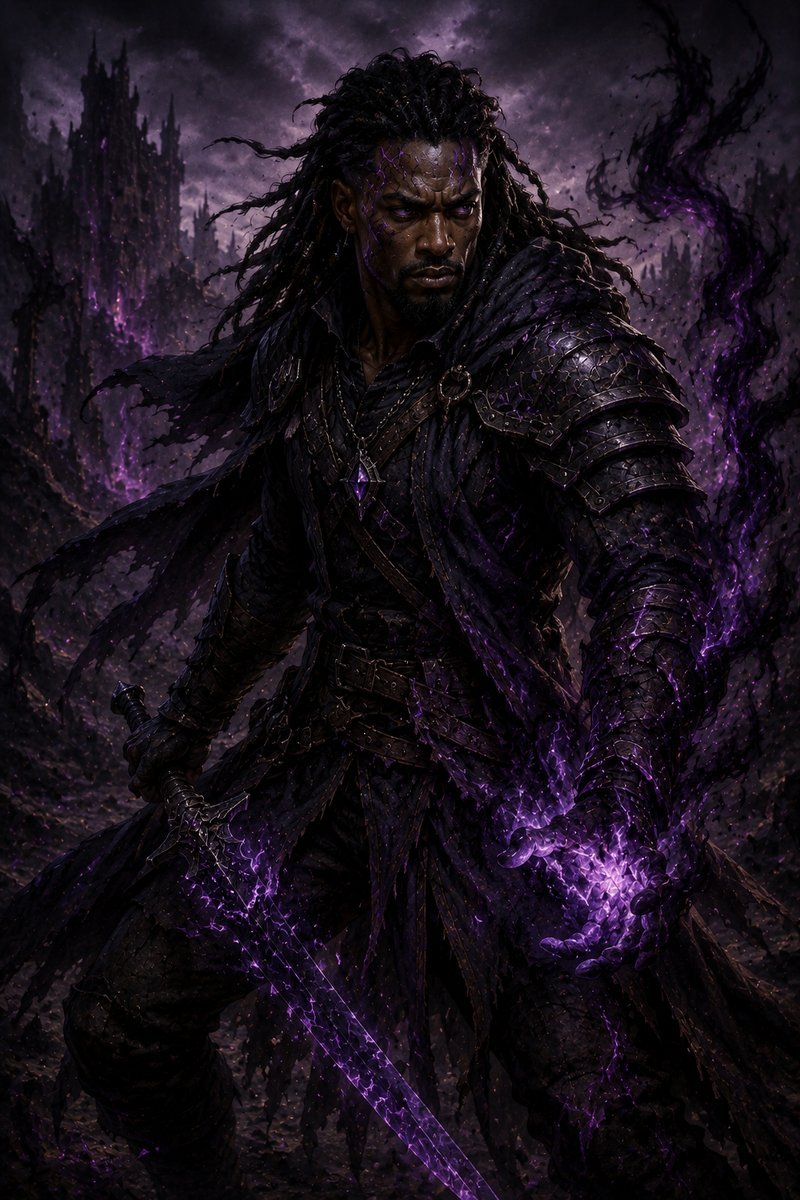
Kael Duskbound
Kael was marked before he had a name to be marked under — born already carrying a trace of the Blight that should, by every account anyone could give his parents, have consumed him before his first year was out. It didn't. He grew up instead in the space between two things nobody had a word for: not sick, not well; not corrupted, not clean. The healers who examined him ran out of names for his condition and eventually stopped trying to find new ones.
What they couldn't cure, Kael learned, slowly and mostly alone, to listen to instead. The Blight in him didn't behave like sickness — it behaved like a current, something that could be resisted, or it could be worked with, and every time he chose the second option he found he could do things the healers had no explanation for either. He taught himself to draw on it deliberately, in careful, measured doses, the way you'd draw on a well you didn't fully trust not to be poisoned. He was usually right not to trust it. He kept drawing on it anyway.
He carries more Corruption than anyone would call wise, and he knows it better than anyone who might warn him. It isn't recklessness. It's arithmetic he's been running since before he could talk — a currency he learned to spend on purpose, in a body that was never going to let him spend nothing at all. Where other heroes fear the Dark Pact waiting at the end of that road, Kael has already spent a lifetime walking toward doors like it and finding, so far, a way to keep walking past.
Monsters (3)
Malachar and the Realm's other named terrors.
Malachar the Undying
He was a true king, once — crowned young, crowned well, and loved in the plain, unremarkable way that good kings are loved while they still draw breath. The songs agree on that much, at least. What they disagree on is the sickness: whether it took him slowly or all at once, whether he saw it coming for years or for a single terrible night. What they agree on again is what he did about it. He would not go. He said so, to his court, to his priests, to whatever god would still take his calls, and when none of them could give him an answer he liked, he went looking for one that would.
He found it in the Rifts — or perhaps he made them, reaching for something on the other side that had no business being reached for. The bargain was simple, the way the worst bargains always are: he would not die. That was all he asked, and that was exactly what he was given, with the precision of something that had been waiting a very long time to be asked. Malachar did not die. He simply stopped being able to. Death opened its door for him one final time and he found, too late, that he had traded away the leaving, not the dying — he crossed the threshold and could not finish crossing it. He has been standing in that doorway ever since.
He sits the Shattered Palace now, wearing a crown that hums like a struck bell in an empty cathedral, ruling a court built from the grief of a kingdom that buried a king who would not stay buried. He does not scheme. He does not conquer. He waits, the way only the patient dead can wait, because waiting is the one thing left that still feels like living. Every Rift that stays open does so a little because of him — a small, endless echo of a door he opened once and has never once managed to close.
The Blighted Warden
The Plains kept wardens long before the Blight came — quiet, unremarkable people whose whole duty was walking the same boundary day after day, making sure nothing got in and nothing got out. Nobody remembers which warden this one used to be. That is, in its way, the point. The role outlasted the person wearing it, the way roles sometimes do, and when the Blight finally reached that stretch of boundary, it didn't find a name to take. It found a duty, still running, with no one left inside it to tell it to stop.
That is what wardens do, in the end — they hold the line even after the line has stopped meaning anything, even after everyone the line was protecting is gone. The Blighted Warden still walks a boundary. It has simply lost the ability to tell the difference between what belongs inside it and what doesn't, so now it treats every living thing the same way it once treated a threat: as something to be met, all at once, with everything it has. It goes first for whoever looks weakest — the old instinct still intact, the same one that once meant protect them first — except protecting, to a warden with nothing left to protect, has curdled into something closer to a mercy killing.
It does not remember being a person. It remembers being on duty, and duty is a harder thing to kill than a body is. Heroes who meet it rarely realize, until it's over, that they were never fighting a monster so much as a job that never got the memo it was allowed to end.
Cinderfang
Wyrms do not need the Blight to be dangerous. That is worth saying plainly, because it is tempting to assume every terror in the Realms shares the same sad shape — a good thing corrupted, a person who lost themselves. Cinderfang was never a person, and it was never good. It was simply the largest, oldest, hungriest thing denning in the high fire-country long before the Rifts opened, and when the Blight came through those peaks it did not need to twist Cinderfang into a predator. It only had to make it worse at being one.
What the Blight gave it was appetite without a ceiling. A wyrm's hunger used to end somewhere — at the bottom of a full belly, at the edge of a territory not worth the trouble of expanding. Cinderfang's doesn't end anywhere anymore. It hunts the strongest thing it can find not out of honor or challenge, the way old songs like to claim of dragons, but because the strongest thing is the one most worth burning, the one that will fight back hardest and therefore feed the longest. It breathes fire the way it always did. There is simply more of it now, and less reason for it to ever stop.
It does not scheme, the way Malachar does. It does not mourn, the way the Warden might, if there were anything left inside it to mourn with. It is exactly what it was before the Realms started tearing — just larger, hungrier, and with a great deal more to burn.